High Current BMS Guide: 300A–500A Smart BMS Selection
01,Jun 2026


If you’re working with 21700 lithium-ion batteries, you already know their power and popularity in e-bikes, power tools, and energy storage systems. But here’s the catch: without the right Battery Management System (BMS), your pack risks underperformance, safety hazards, or even early failure. Choosing a BMS that fits your exact 21700 pack configuration isn’t just smart—it’s essential.
In this post, you’ll get 10 expert tips to pick a BMS that balances safety, reliability, and longevity. From voltage matching to active balancing, temperature safeguards to communication features—we cover the technical must-haves to protect your investment and peace of mind.
Let’s get straight to what matters and help you avoid costly mistakes with your next 21700 battery management system.
Worried about picking a BMS that fits your 21700 lithium-ion pack? First, match the voltage and cell configuration exactly. Your BMS needs to support the right number of cells in series (1S to 20S or more) and handle the pack’s maximum continuous voltage without breaking a sweat.
Nominal voltage is the average voltage during normal operation (about 3.6–3.7V per 21700 cell).
Max voltage is the highest voltage you’ll see when fully charged (usually around 4.2V per cell).
The BMS must tolerate the max voltage x number of cells to avoid damage. For example:
| Pack Configuration | Nominal Voltage (V) | Max Voltage (V) |
|---|---|---|
| 13S (e-bike) | 48 V (13 x 3.7V) | 54.6 V (13 x 4.2V) |
| 16S (home storage) | 59.2 V (16 x 3.7V) | 67.2 V (16 x 4.2V) |
| 20S (high capacity) | 74 V (20 x 3.7V) | 84 V (20 x 4.2V) |
Choosing a BMS rated just at the max pack voltage might seem okay, but it’s risky. Over-spec’d voltage ratings:
Give headroom for voltage spikes and measurement tolerance.
Reduce stress on components, which extends the BMS and pack life.
Prevent premature failures from voltage overshoot during rapid charge or discharge.
For your 21700 pack, pick a BMS that handles at least 5% above your max voltage. For example, if your pack peaks at 67.2V, the BMS should safely manage about 70V or more.
Takeaway: Always verify that your BMS supports the exact cell count and max voltage of your 21700 pack—and then some. This simple step protects your pack’s health and ensures reliable performance.
When picking a BMS for your 21700 lithium-ion battery pack, don’t just focus on the peak current rating. What really matters is the continuous current rating—the amount of current your system will draw during normal use without overheating or damaging the pack.
Peak current is the short burst your motor controller or inverter can pull, but it’s not sustainable.
Continuous current is what your BMS needs to support safely over longer periods.
Check the specs of your motor controller or inverter for continuous current draw.
Add some margin (20-30%) to handle unexpected spikes or inefficiencies.
Example: If your motor pulls 80A continuous, look for a BMS rated at least 100A continuous.
High temperatures reduce a BMS’s effective current rating.
If your pack will run in hot conditions or for extended periods, derate the current by 10-20%.
This keeps your pack safe and extends its life.
Choosing a BMS with the right continuous current rating for your real-world loads helps avoid overheating and unexpected shutdowns, leading to a safer and longer-lasting 21700 battery pack.
When choosing a 21700 BMS for lithium-ion batteries, active balancing is a game-changer, especially for packs with more than 4 cells in series (4S+). Here’s why:
Passive vs. Active Balancing: Passive balancing wastes excess energy as heat to even out cell voltages, which can drain overall capacity and generate extra heat. Active balancing moves energy from stronger cells to weaker ones, preserving capacity and reducing stress on cells.
Minimum Active Balance Current: For 21700 cells with around 5000mAh capacity, you want an active balancing current of at least 30mA to make a noticeable difference over time. Higher balance currents speed up the balancing process, keeping all cells more even during charge and discharge cycles.
Why It Matters: Active balancing improves usable capacity by preventing weaker cells from limiting the pack. This means longer pack life, better performance, and improved safety for your 21700 lithium-ion battery pack.
For electric bike riders and home energy storage users in the U.S., investing in a smart, active balancing BMS for your 21700 cells means getting the most from your battery and avoiding premature degradation.
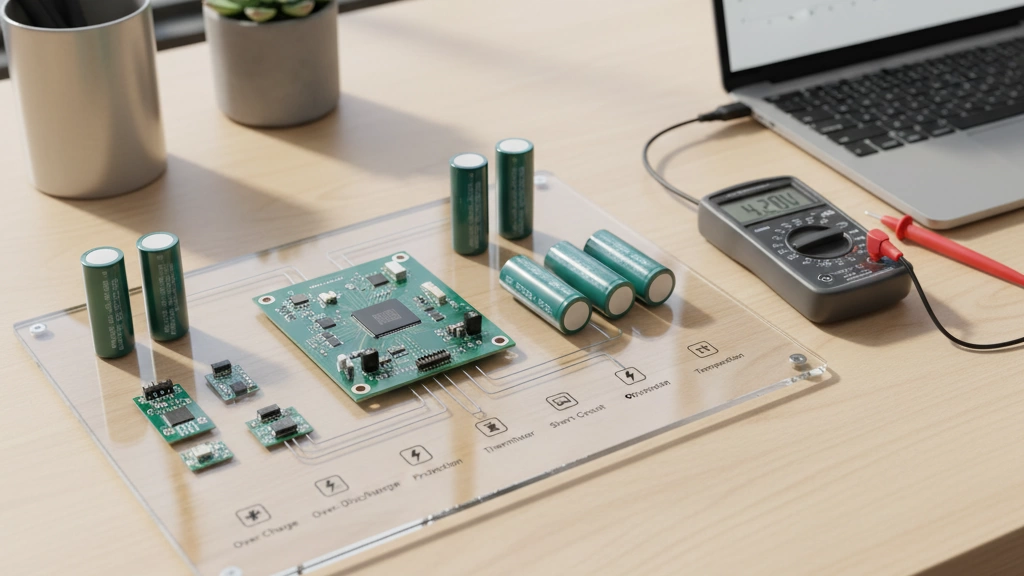
When choosing a 21700 battery pack protection board, never cut corners on safety features. A solid BMS for 21700 cells must cover all protection bases to keep your battery safe and reliable.
| Protection Type | Why It Matters |
|---|---|
| Overcharge Protection | Prevents cells from going above max voltage, which can cause swelling or fire. |
| Over-discharge Protection | Stops cells from draining below safe levels to avoid capacity loss or damage. |
| Over-current Protection | Guards against excessive current that can overheat and damage cells or wiring. |
| Short-circuit Protection | Quickly cuts power if a short occurs to avoid sparks or fires. |
| Temperature Cut-off | Shuts down charging/discharging if cells get too hot or cold. |
Cell-level monitoring scans individual 21700 cells to catch imbalances or failing cells early.
Pack-level monitoring looks at overall voltage and current but misses cell-specific issues.
For best results, opt for a smart BMS with Bluetooth 21700 and full cell-level protection. This way, you get accurate voltage data and safety alerts to avoid costly pack failures.
Charging lithium-ion cells below about 32°F can cause permanent damage. This feature is especially critical for outdoor gear like e-bikes or solar battery setups exposed to cold climates.
Bottom line: Your BMS should include all these protective functions by default. Skimping here risks safety and pack lifespan, and for US users relying on reliable outdoor and transportation power, that’s just not worth the trade-off.
Temperature monitoring is a critical part of any 21700 BMS selection guide. Getting this right helps prevent heat-related issues like thermal runaway, which can destroy your pack or worse.
NTC sensors measure pack and cell temperatures.
For 21700 packs, place sensors on:
Top and bottom of the battery pack
Key cells prone to heating (usually middle cells in a long series)
Battery pack surface if possible
More sensors = better temperature accuracy and safety.
| Action | Typical Threshold (°C) | Purpose |
|---|---|---|
| High-temp discharge cut-off | 60 – 70°C | Stop discharge to avoid overheating |
| Low-temp charge inhibition | 0 – 5°C | Prevent charging below freezing to avoid damage |
These limits protect the battery under tough conditions, like hot summer rides or cold winter starts common in the U.S.
A good 21700 BMS with temperature sensors stops the current instantly when temps spike. For example, outdoor e-bike users in Arizona avoided battery fires because their BMS cut power before cells overheated. Proper temp monitoring literally saves packs and users.
Remember: Without precise temperature monitoring, your 21700 battery pack protection board can’t keep your pack safe in extreme heat or cold.
When picking a 21700 BMS, communication options matter. The right interface lets you monitor your battery pack’s health and performance easily—no guesswork.
| Communication Type | Use Case | Notes |
|---|---|---|
| UART | Basic connection to controllers | Simple, reliable |
| CAN | Complex systems, e-bikes, EVs | Fast, multi-node networks |
| SMBus | Laptop batteries, smart devices | Less common in e-mobility |
| Bluetooth | Wireless smartphone apps | Convenient for real-time data |
For e-bikes and home energy storage: CAN or Bluetooth is ideal.
Simple motor controllers: UART might be enough.
Want real-time insights? Bluetooth BMS with an app helps you see:
State of Charge (SoC)
State of Health (SoH)
Individual cell voltages
Monitoring lets you catch issues early, balance cells better, and extend pack life. Plus, apps make it easy to keep tabs without extra gear.
Make sure your 21700 battery pack protection board supports the communication you’ll actually use—especially if you want smart features like over-the-air updates or alerts on your phone.
When choosing a 21700 BMS, physical size and mounting options matter a lot. These batteries often go into compact packs with limited space, so your BMS needs to fit that exact form factor without forcing awkward adjustments.
Key points to consider:
Dimensional Constraints: Measure your battery pack area precisely. Some BMS units are bulky, which can interfere with your design—especially in e-bikes or portable storage where space is tight.
Mounting Options: Look for BMS models that support simple, secure mounting methods like screw holes, adhesive pads, or modular connectors. Proper mounting ensures vibration resistance and longer-lasting connections.
Waterproof Ratings: For outdoor or e-mobility use, an IP65 or IP67 waterproof rating is essential. These ratings protect the BMS against dust, water spray, or even temporary submersion—common in U.S. climates where rain or dust is frequent.
Heat Dissipation: Li-ion packs generate heat, especially at high currents. Choose a BMS with good thermal management, like built-in heat sinks or potting compounds that protect electronics while allowing heat to escape safely.
A waterproof BMS for electric bike or portable storage not only prevents damage but also enhances safety by resisting moisture-related short circuits. Always account for these factors to ensure your 21700 battery pack protection board stays reliable on the road or at home.
Choosing the right size, mounting style, and waterproof rating is as critical as picking protection features — they keep your pack safe, secure, and ready for whatever the American outdoors throw at it.
When choosing a 21700 BMS, certifications matter a lot. Look for reliable marks like UL 2271, IEC 62619, UN38.3, RoHS, and CE. These show the BMS meets safety and quality standards important in the U.S. market and beyond.
But don’t stop at just seeing “certified” on the label. Ask the seller for actual test reports and documentation to verify the claims. Many cheap or uncertified BMS units claim certifications they don’t truly have, which can put your battery pack—and your safety—at risk.
Traceability is just as key. Working with a supplier that can trace component sources and manufacturing batches lets you address any issues quickly and ensures higher quality control over time.
In short, reliable certifications combined with traceability mean you’re getting a BMS built for safe, long-lasting, and compliant use in 21700 lithium-ion battery packs. Don’t cut corners here—it’s worth the peace of mind.
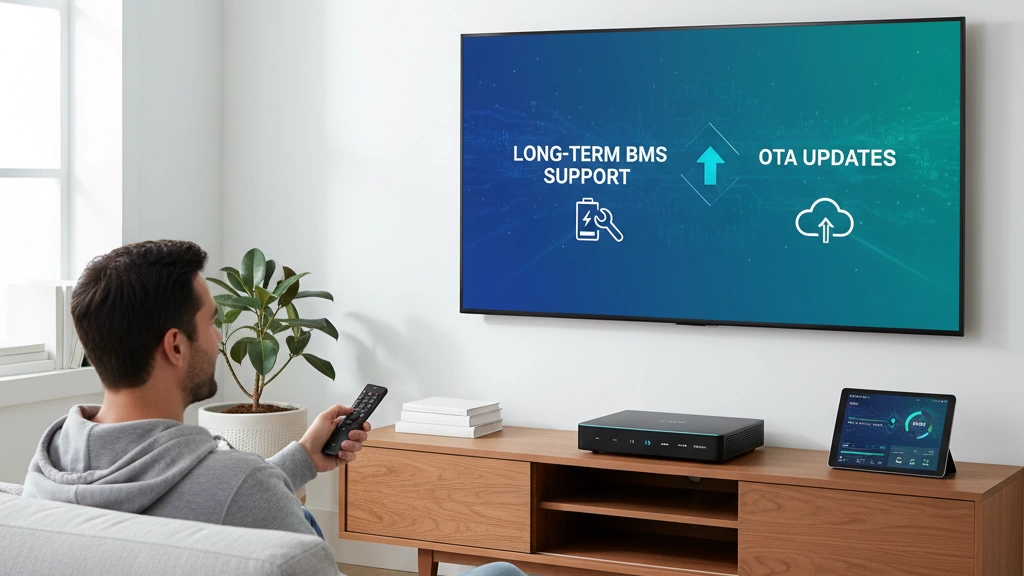
When picking a 21700 BMS, don’t overlook software support. A system with reliable firmware updates keeps your battery pack safer and more efficient over time. Look for a BMS that offers over-the-air (OTA) update capability—this lets you update the firmware without swapping parts or sending it back to the manufacturer.
Why does this matter? Battery tech and safety standards keep evolving. A BMS that can receive regular updates helps you stay ahead of new requirements and fixes. This future-proofs your investment, especially if you plan to use your 21700 pack for years.
Bottom line: choose a smart BMS with ongoing software support to avoid getting stuck with outdated tech and missed safety improvements.

When choosing a 21700 BMS, don’t get stuck looking at the sticker price alone. The total cost of ownership matters more. A cheap BMS may save you money right now but can cost you big in the long run.
If a KuRui BMS costs 30% more upfront but adds 2+ years of reliable life and prevents early pack failure, you end up paying less for replacement parts and downtime.
Remember, a well-built BMS for your 21700 lithium-ion battery pack is an investment in safety, performance, and peace of mind—especially for e-bike riders and home energy storage users across the U.S.
To make your life easier, we’ve put together a downloadable PDF checklist for choosing the right BMS for your 21700 lithium-ion battery pack. This checklist highlights the key points you can’t miss—perfect if you want a quick reference while buying or building.
Ignoring voltage specs: Don’t pick a BMS without matching the pack’s exact voltage and cell count.
Underestimating current: Always base current rating on real-world continuous loads, not just peak numbers.
Skipping active balancing: Especially for packs over 4S, passive balancing wastes battery life and capacity.
Overlooking protection features: Full protection at both cell and pack level is a must.
Neglecting temperature sensors: Proper sensor placement can prevent costly thermal issues.
Assuming certifications guarantee safety: Ask for actual test reports, not just labels.
For typical 21700 setups used in the U.S.—like 13S to 20S e-bike packs or 15S to 17S home energy storage systems—KuRui offers a reliable range of BMS models designed with these common sizes in mind. They balance solid protection, active balancing, and smart features like Bluetooth monitoring.
Using KuRui’s series means you get:
UL certified safety standards
Active balancing for longer pack life
Communication options for real-time monitoring
Durable, waterproof designs suited for outdoor use
Download the checklist today to make sure your next 21700 battery pack gets the right BMS—not just now, but for years to come.