High Current BMS Guide: 300A–500A Smart BMS Selection
01,Jun 2026


Correctly wiring a Battery Management System (BMS) together with a balancer is essential for maintaining cell consistency, preventing overcharge/over-discharge, and ensuring long-term lithium battery reliability. Whether you’re working with LiFePO₄ (LFP) packs or Li-ion NMC/NCA assemblies, the wiring principles remain similar — but details such as voltage limits, cell order, and balance-wire routing must be precise.
This guide provides practical, step-by-step wiring tips, highlights common mistakes, and explains how a balancer works together with a BMS to protect multi-cell lithium battery packs.
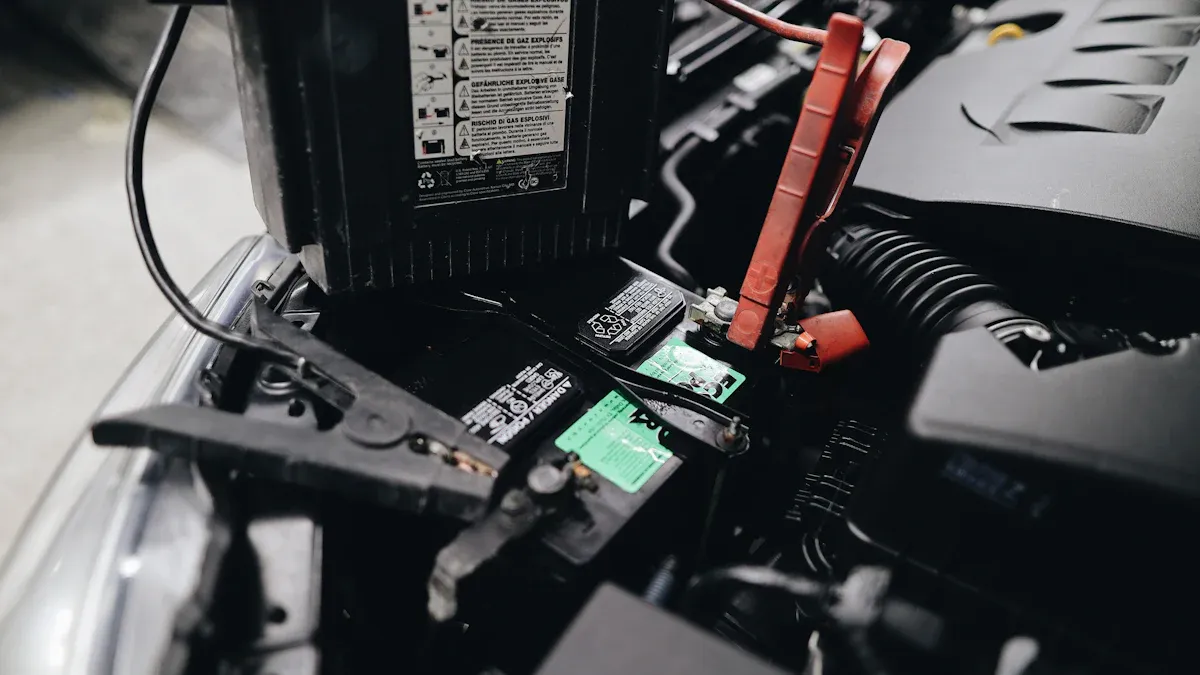
A BMS primarily handles:
Overcharge protection
Over-discharge protection
Overcurrent / short-circuit protection
Temperature protection
Cell monitoring and balance control (in active or passive systems)
A balancer equalizes voltage differences between cells by:
Shunting excess charge (passive balancing)
Redistributing charge between cells (active balancing)
When used together, the BMS ensures electrical safety, while the balancer maintains long-term pack health by keeping cell voltages aligned.
Before wiring, confirm the following parameters:
Cell count (S number) → e.g., 4S, 7S, 13S, 16S
Battery chemistry → LiFePO₄ has different cut-off voltages than NMC
Maximum charge/discharge current
Balancer compatibility (some BMSs include built-in balancing)
Using a mismatched BMS can cause inaccurate readings, early cutoff, or pack damage.
The most critical principle when wiring balance leads:
Always connect balance wires in ascending order: B- → B1 → B2 → … → Bn.
This ensures:
Accurate voltage references
No reverse-polarity spikes to the BMS
Correct pack initialization
Never connect B+ or the main discharge wires before all balance wires are correctly attached.
Attach the thick negative wire from the BMS to the battery pack’s main negative.
This provides the system with a stable reference point.
Attach the balance leads one by one:
B0 / B- → cell group negative
B1 → the positive end of cell group 1
B2 → the positive end of cell group 2
Continue until the final wire reaches B+
Do not skip any cell group. Missing one connection will cause abnormal voltage readings.
Once all balance wires are secured, connect the B+ main wire.
Depending on BMS topology:
Common-port BMS: P-, C-, and discharge share the same port
Separate-port BMS: P- for discharge; C- for charging
Ensure the correct port is used to avoid charge blocking or MOSFET overheating.
There are three common integration methods:
Many Smart BMS units have integrated passive or active balancing.
No extra wiring is needed aside from standard balance leads.
When using an external balancer:
Connect the balancer’s wires to the same cell nodes as the BMS
Maintain consistent wire order
Ensure both systems reference the same B- point
For large packs (energy storage / e-mobility):
Use shielded wires if wire length is >30 cm
Keep balancer wiring away from high-current paths to reduce noise interference
This may instantly damage the BMS.
Causes wrong voltage readings or BMS lock-up.
Each chemistry has unique limits.
Leads to intermittent balancing or sudden power cutoff.
Always use the same pack reference point (B-).
Use 18–22 AWG wire for balance leads, depending on length.
Keep balance wires short and twisted to reduce interference.
Double-check polarity before plugging into the BMS port.
If unsure, measure each cell group with a multimeter.
When assembling high-voltage packs (>60V), wear insulated gloves.
Before powering the system:
Measure each cell group
Confirm voltage differences are within ≤0.05V for best balancing performance.
Check BMS app or PC software
Ensure all voltages display correctly.
Perform a low-current test
Charge at 0.1–0.2C to verify normal cutoff behavior.
A well-wired BMS and balancer system ensures:
Stable performance
Longer battery lifespan
Reduced capacity loss
Better protection against cell drift
Whether you’re building an e-bike pack, portable power system, or large energy storage module, following these wiring principles will significantly improve reliability and safety.
You can check cell voltages with a multimeter. If the BMS balances cells and protects from overcharge, it works as expected.
Not every BMS fits every pack. You must match the BMS to your battery’s voltage, cell count, and current needs.
You risk damaging the BMS or battery. Always follow the wiring diagram and double-check the order before connecting.